

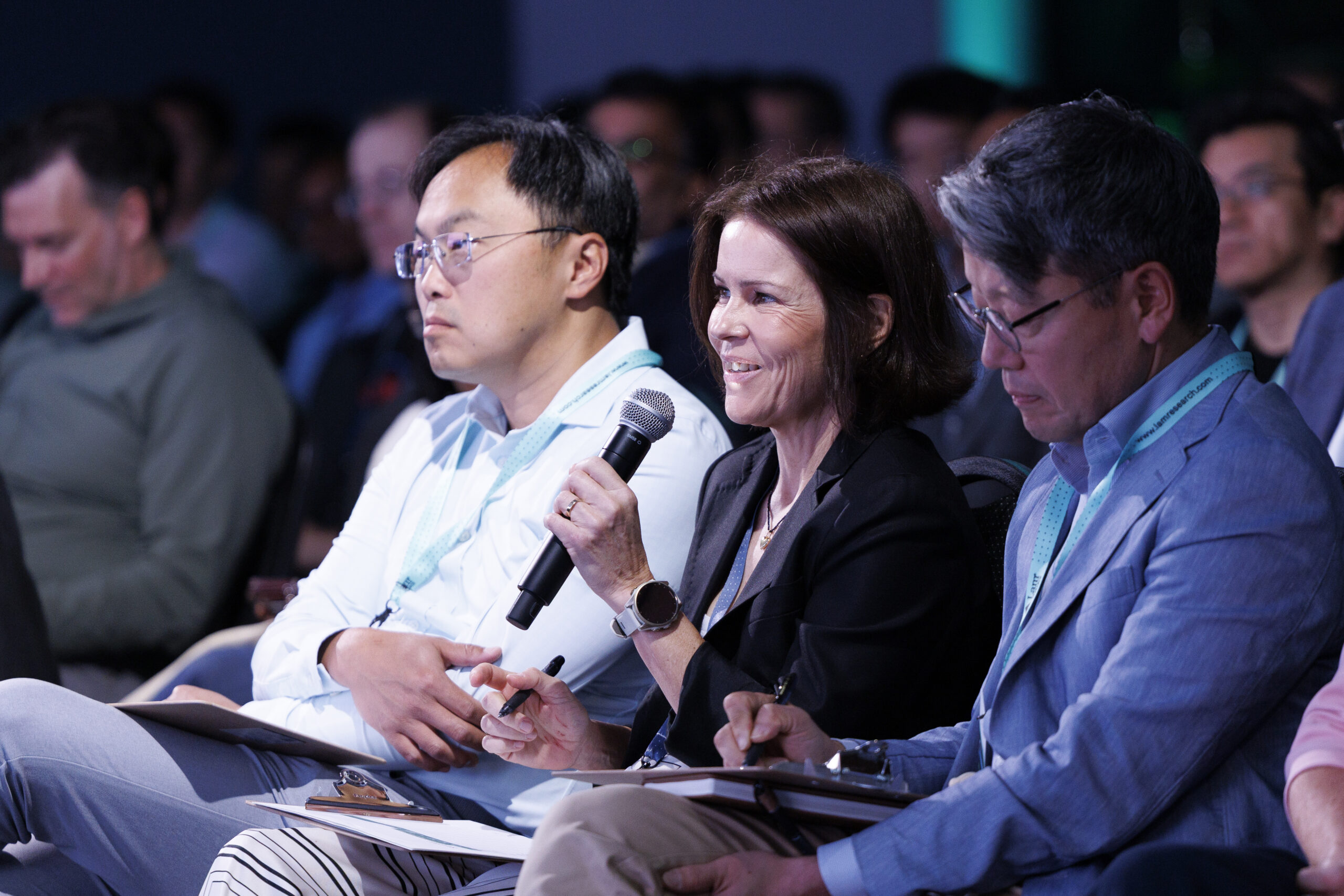
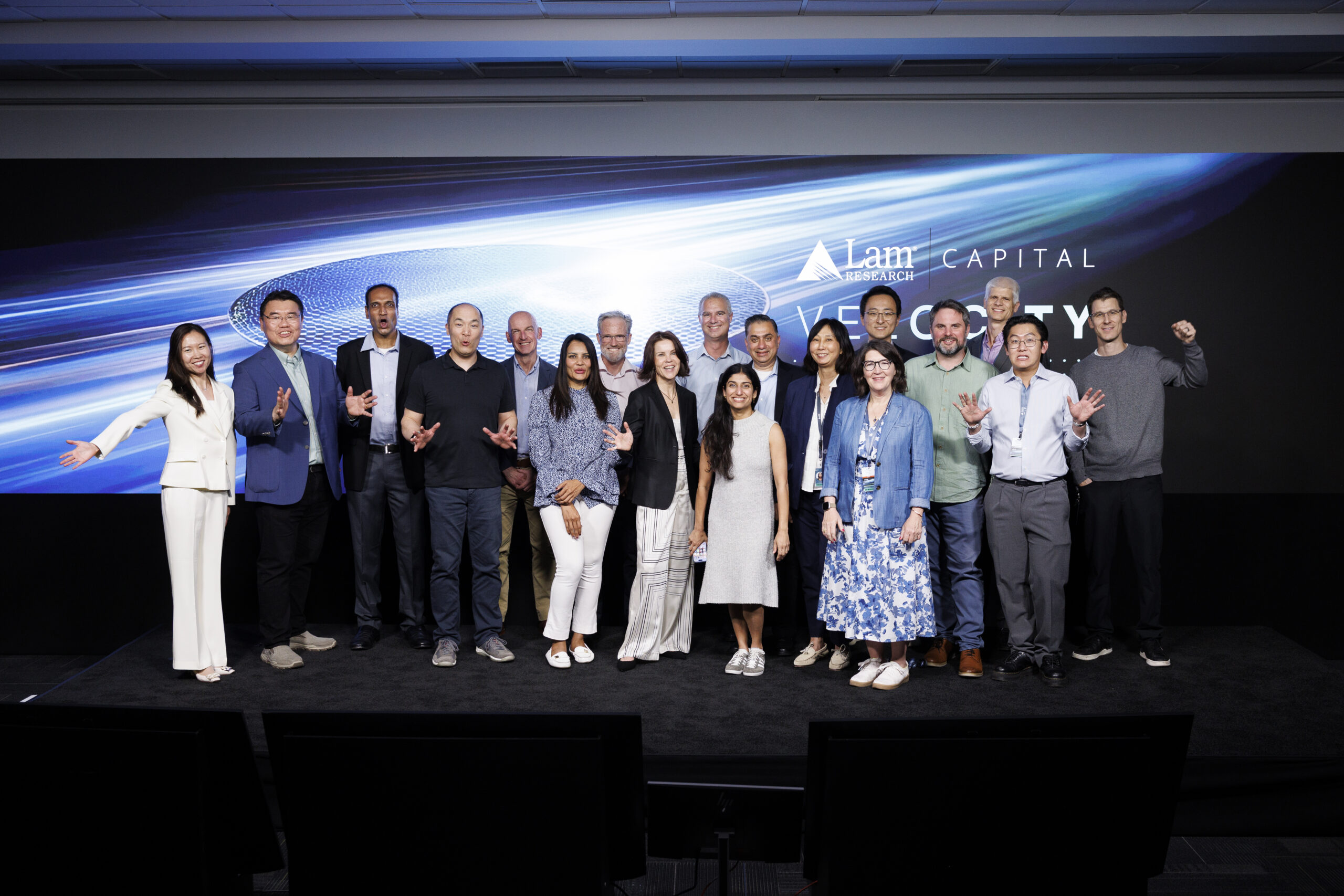
This premier event brought together startups, investors, and technology leaders focused on one central challenge: building the AI backbone for the future of semiconductor manufacturing. Sessions highlighted advancements in AI-enabled semiconductor innovation, including advanced manufacturing, automation, agentic AI and more. The program also provided opportunities to engage with industry experts and peers across the global semiconductor and venture ecosystem.


Winner Spotlight
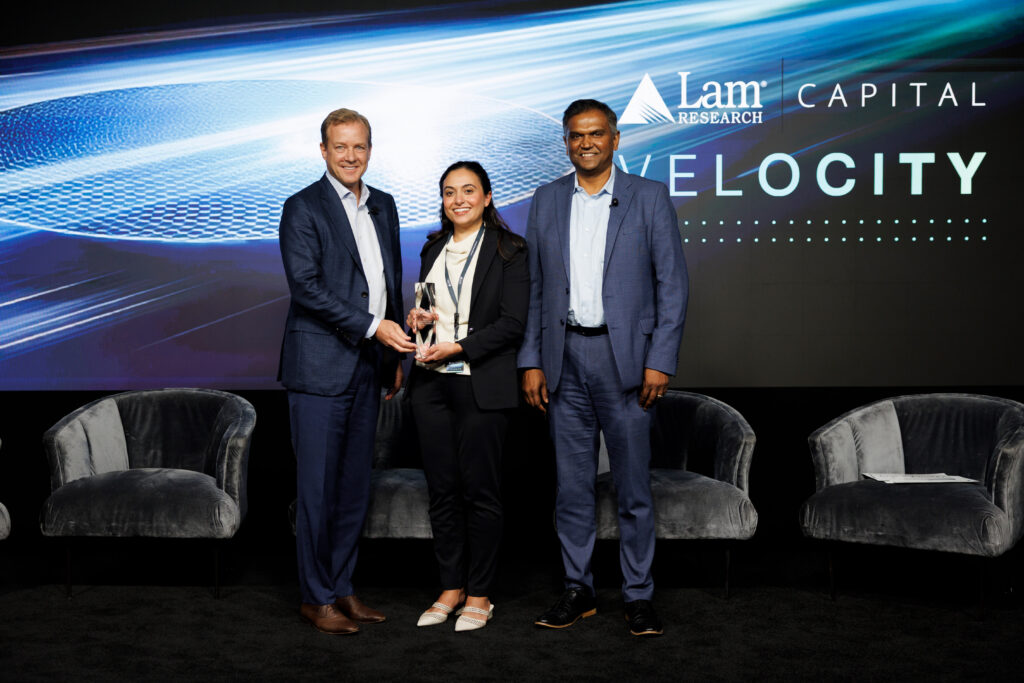
Lightfinder won with a compact sensing platform designed to bring metrology inside the tool. The 18-month-old MIT spinout based in Cambridge, Massachusetts, is developing a chip-scale optical depth-sensing instrument that could help fabs move closer to real-time, automated closed-loop process control by reducing the need for manual, time-consuming measurements.
What they’re saying:
“Being in front of a multi-trillion-dollar market cap audience gave us exposure we simply wouldn’t get otherwise—and seven minutes of their attention to tell our story is incredibly powerful,” said Lightfinder CEO Diana Mojahed. “This win is really a testament to our team, and we’re excited to scale Lightfinder and bring our innovation to reality.”
Meet the Runner-Up
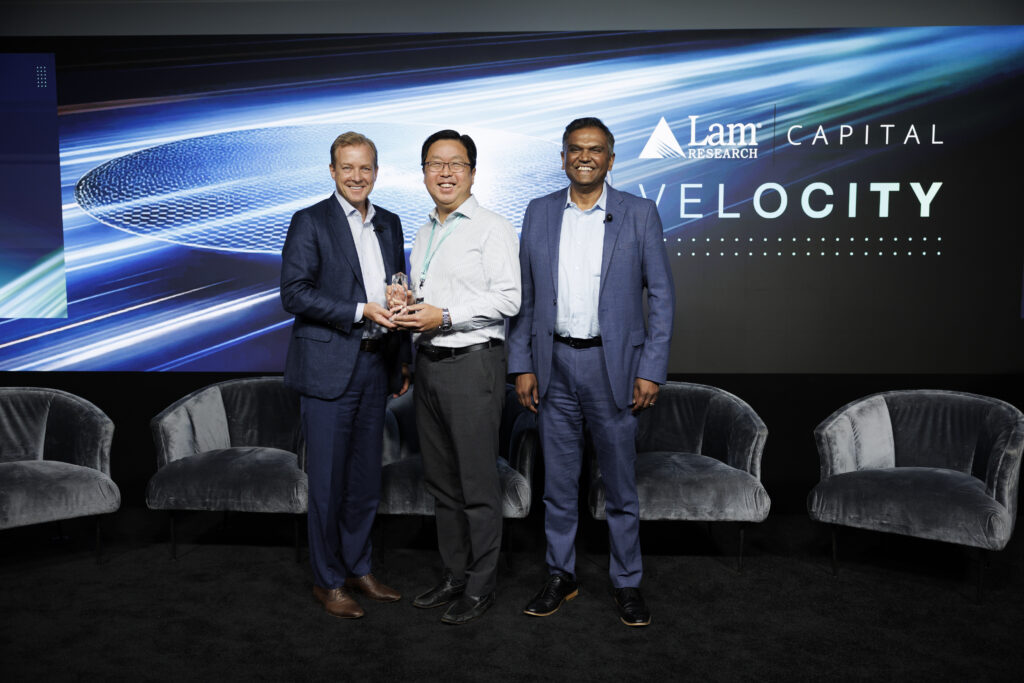
NSC of Singapore earned runner-up recognition for an optical interconnect technology that uses light to move data between chips more efficiently than conventional electrical wiring.
What they’re saying:
CEO Andrew Kim said the approach addresses a major bottleneck in AI and HPC by enabling higher bandwidth, lower power use, reduced heat, and better scaling for AI systems.
Featured Speakers

Tim Archer
Biography
Timothy M. Archer is president and chief executive officer at Lam Research. He joined the company in 2012 following its acquisition of Novellus Systems, Inc. (“Novellus”), becoming Lam’s executive vice president and chief operating officer. He was later promoted to president and chief operating officer and then president and chief executive officer in December 2018.
Prior to joining Lam, Tim had an 18-year tenure at Novellus, where he served as the company’s COO and previously held a variety of technology development and leadership roles, including executive vice president of the PECVD and Electrofill Business Units; vice president of Worldwide Sales, Marketing, and Customer Satisfaction; and senior director of technology for Novellus Systems Japan. He began his career at Tektronix, Inc. in 1989, developing processes for high-speed bipolar integrated circuits.
Since 2024, Tim has served as a member of the board of directors of Johnson Controls International. Tim is also on the International Board of Directors for SEMI, the global industry association representing the electronics manufacturing and design supply chain. From 2020 to 2022, he served as chairman of the board for the National Consortium for Graduate Engineering Degrees for Minorities (GEM): a nonprofit organization in the U.S. that is dedicated to increasing the participation of underrepresented groups in engineering and science at the master’s and doctoral levels.
Tim completed the Program for Management Development at the Harvard Graduate School of Business and earned his B.S. degree in applied physics from the California Institute of Technology.

Audrey Charles
Biography
Audrey Charles is senior vice president of corporate strategy and advanced packaging, and president of Lam Capital at Lam Research. In this position, she is responsible for leading the executive management team in the development of strategic priorities and key initiatives that support the company’s long-term profitable growth. She is also responsible for accelerating the company’s market-leading position in advanced packaging to deliver differentiated technology and support to customers.
Additionally, Audrey oversees Lam’s Corporate Development team and investment arm, Lam Capital, which invests in disruptive companies that advance the semiconductor ecosystem through next generation industrial automation, technology and product innovation, and new market opportunities. She brings a broad base of experience to her role, including engineering, customer technology management and investor relations. Since joining Lam in 1995, she has served in a range of leadership positions including senior vice president of Global Human Resources and vice president of corporate initiatives.
Audrey earned an M.B.A. from the MIT Sloan School of Management and a B.S. in applied physics from Dublin City University.

Sesha Varadarajan
Biography
Sesha Varadarajan is executive vice president and chief operating officer at Lam Research. In this role, he leads Lam’s Global Product Groups, the Customer Support Business Group (CSBG), Corporate Strategy, Global Trade and Government Affairs, and Lam India.
Sesha joined Lam in 2012 following the acquisition of Novellus. Most recently, he served as senior vice president of the Global Products Group, where he was responsible for overseeing all aspects of Lam’s product groups, worldwide lab network, and Lam India. Over his tenure at Lam, he has held multiple senior leadership roles across the company’s product and technology organizations, including senior vice president and general manager of the Deposition Business Unit. He joined Novellus in 1999, beginning as a process engineer and advancing to senior technical and business unit leadership roles, including senior vice president and general manager of the PECVD and Electrofill Business Units.
Sesha holds more than 170 global patents in semiconductor wafer processing and equipment design. He earned a master’s degree in manufacturing engineering and material science from Boston University and a bachelor’s degree in mechanical engineering from the University of Mysore.

Srini Ananth
Biography
Srini Ananth is a Managing Director located in the Bay Area. He joined Intel Capital in 2015.
In his role, Srini invests in Deep Tech, Cloud Infrastructure, and AI Applications companies. Srini led investments in Astera Labs, Ayar Labs, BabbleLabs (acquired by Cisco), Common Sense Machines, Eliyan, Inworld AI, Iris.TV, Joby Aviation (NYSE: JOBY), OnScale, SummerBio, VeriSIM Life, and three other companies still in stealth. He was also involved in investments in Delta ID (acquired by FPC), Spectrum Labs, and Volocopter.
Srini currently serves as a director or observer on the board of Astera Labs, Ayar Labs, Common Sense Machines, Eliyan, Inworld AI, SiPhox and VeriSIM Life. Previously he served as an observer at BabbleLabs and Joby.
Srini has over a decade of operating experience spanning engineering, business development, and product management roles in IoT, mobile, and semiconductors. He holds an MBA from UCLA and MSEE from Arizona State University. He loves single-malts, skiing, and rooting for the Dallas Cowboys.

Ben Bajarin
Biography
Ben Bajarin is CEO and Principal Analyst at Creative Strategies, Inc., where he has worked since 2000. His research sits at the intersection of semiconductors, AI infrastructure, personal computing, consumer technology, and business strategy, with a focus on how technology transitions reshape competitive advantage, market structure, and product adoption.
Ben’s work combines industry research, primary market insight, technical analysis, and strategic advisory to help companies and investors understand where technology markets are going and what will drive durable differentiation. He has long studied the relationship between people and technology, including the behavioral, economic, and architectural forces that shape how products are built, adopted, and monetized. Before joining Creative Strategies, Ben worked at Cypress Semiconductor and founded two startups in the late 1990s.

Jim Chambers
Biography
Dr. James Chambers is Vice President of Silicon Engineering and Sourcing at NVIDIA. In this role, he leads efforts to optimize semiconductor manufacturing in collaboration with external partners, driving improvements in yield, performance/power, reliability, quality, and delivery across NVIDIA’s GPU and CPU silicon product portfolio. He is responsible for the end-to-end supply of internal and external NPI SoC samples, managing the silicon engineering interface with CPU, GPU, and memory vendors, and overseeing NVIDIA’s silicon failure analysis labs. Dr. Chambers has a proven track record of leading technology, manufacturing, product development, and product management teams to deliver some of the industry’s most innovative solutions. At AMD, he oversaw the Foundry Technology and Operations team, with responsibility for end-to-end process technology—from pathfinding through high-volume manufacturing—including AMD’s failure analysis labs. Prior to AMD, he held various roles at Texas Instruments, contributing to Silicon Technology R&D for advanced low- and high-power process nodes. He is the inventor or co-inventor of more than 50 patents and has authored 45 publications and technical presentations covering SiON, high-k dielectrics, metal gate electrodes, and advanced device architectures.
Tony Chao
Biography
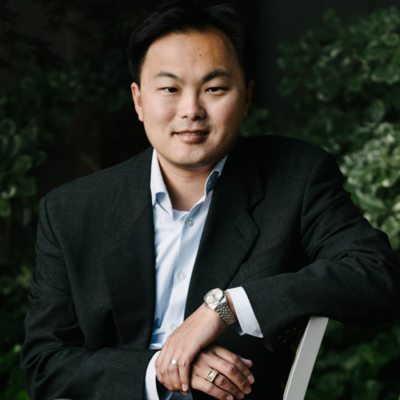
As a seasoned venture capitalist and technologist with over two decades of experience, Tony brings broad international experience, agile business development acumen, strong technical analytics, and a service-oriented, entrepreneurial mindset. Prior to joining Tyche Partners, Tony was the General Manager of Applied Ventures, the venture capital arm of Applied Materials. Tony managed a +$250M portfolio of over 60 companies. Tony is a recognized leader in the corporate venture community having been named to the Global Corporate Venturing Powerlist multiple times and served as Chair of the NVCA CVG group. Tony is passionate about disruptive technologies with the capacity to make the world a better place. Tony has experience in enterprise software, mobile software, AI systems, life science, sustainability, AR/VR, advanced displays, and semiconductors. Some of Tony’s past investments include SunEdison (acquired by MEMC), Infinite Power Solutions, Inc. (acquired), Grandis (acquired by Samsung), Liquavista (acquired by Samsung), Adesto Technologies (IPO), Twist Bioscience (IPO), Enki Technology (acquired by First Solar), Persimmon Technologies (acquired by Sumitomo Heavy Industries), Point Engineering (IPO), Tsukuba Seiko (IPO), Nexplanar (acquired by Cabot Microelectronics), IMS Nanofabrication (acquired by Intel), PlayNitride (IPO) and Vence (acquired by Merck). Currently Tony is serving as board member/observer at Ayar Labs, LightForce Orthodontics, Guru Wireless, Crossbar, Elastix.ai and VEIR. Before becoming a venture investor, Tony served in technology leadership roles at several startups in the Boston area, including Director of Engineering at Cymfony (acquired by TNS Media Intelligence) and Lobby7 (acquired by ScanSoft/Nuance). Tony holds Bachelor of Science and Master’s degrees in Electrical Engineering and Computer Science from MIT, as well as a Bachelor’s degree in Management Science. He also holds an MBA from Harvard Business School.
Heejin Chung
Biography
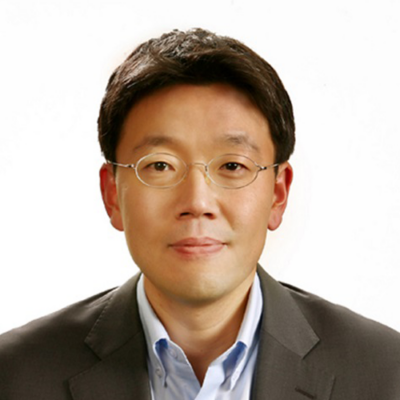
Heejin Chung has established and has been leading a venture investment operation for SK hynix since 2015. His investment focus areas include, but not limited to, emerging memory technologies and semiconductor in general, datacenter & cloud, artificial intelligence, automotive, and any disruptive technologies and business models that will have significant impacts on memory (i.e. DRAM, NAND/SSD, CMOS image sensors) business in 5 years and beyond. His current board responsibilities include Stratio as a board member, Elastics.cloud, FMC, TetraMem, MemVerge, TidalScale, GigaIO and Femtometrix as a board observer. He holds a BA from Seoul National University with a major in business and an MBA from the Kellogg School of Management at Northwestern University.

Shahin Farshchi
Biography
Inspired by Knight Rider and Star Trek, Shahin grew up with a passion to endow superpowers to humanity through feats of engineering. He learned BASIC on an IBM PC XT clone he built at his aunt’s computer store and dialed into Bulletin Board Systems in the 4th grade. A few years later, he was fixing an Alfa Romeo at his uncle’s repair shop. He aspired to design microchips, software, and integrated systems that could one day rival K.I.T.T. or even power warp drives to carry humanity to the far corners of the galaxy. He is a generalist at Lux, which has $7 billion under management, and has been first investors in category-defining companies across AI, automation, biotech, compute, defense, energy, infrastructure, robotics, and beyond — including Anduril, Applied Intuition, Auris, Chronosphere, Cognition, Eikon, Hugging Face, Impulse Space, Physical Intelligence, Runway, Sakana, and Together. Lux has created and co-founded more than 20 de novo companies through Lux Labs, and multiple Lux investments have become lasting publicly traded companies and major divisions acquired by Amazon, Cisco, Databricks, J&J, Meta, Palo Alto Networks, and more. For more than two decades, Shahin has partnered with founders building frontier technologies, guided by deep respect for the entrepreneur and the company-building journey. After working at several software startups, he founded his first company in 2004 based on his PhD research designing chips, systems, and software to capture and interpret brain signals. In 2006, he joined Lux at the invitation of its founding team and has since cofounded and led investments in companies spanning AI, semiconductors, autonomy, and aerospace — from early conviction to enduring scale. These include companies that have become publicly traded (NYSE: AEVA; NYSE: PL) and those acquired by Intel (Nervana), Amazon (Zoox), Silicon Labs (Silicon Clocks), and Lattice Semiconductor (SiBeam). An engineer at heart, Shahin works alongside founders as a long-term partner, connecting them with the resources, talent, and relationships towards building generational companies. Shahin has two young daughters and enjoys flying small aircraft.
Siddharth Gupta
Biography
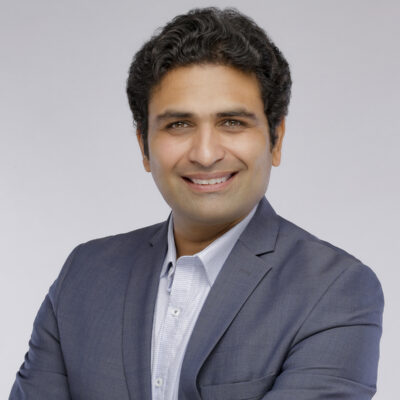
Siddharth is a Managing Director at Samsung Ventures, focusing on investments in AI, Robotics and Semiconductors. Siddharth’s recent investments include companies like Encharge, Figure, Skild and Gimlet labs. Siddharth has a decade long experience in technical roles at companies like Apple, Nvidia and Maxim Integrated. Prior to Samsung, Siddharth worked as a hardware system architect at Apple, where his team was responsible for early-stage technology investigations for enhancing the Apple consumer product lines. Siddharth holds an MBA from UC Berkeley, Haas School of Business, an MS in Electrical Engineering from Stanford University, and a B-Tech in Electronics Engineering from Indian Institute of Technology.
Tony Kim
Biography
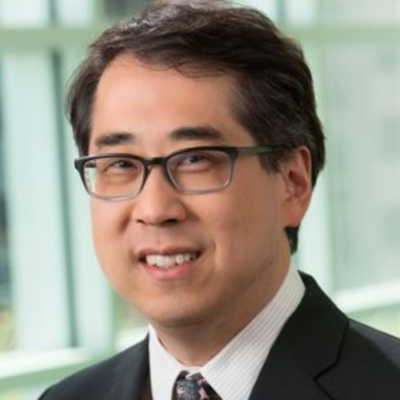
Tony Kim, Managing Director, is Head of the Global Technology Team within the Fundamental Equities division of BlackRock’s Portfolio Management Group. He is lead portfolio manager of the BlackRock Technology Opportunities Fund and related global strategies. Mr. Kim joined BlackRock in 2013. His 30 years of experience in technology investments also includes key roles at Artisan Partners, Credit Suisse Asset Management, Neuberger Berman, Merrill Lynch and SG Warburg. Mr. Kim is a member of the Advisory Board for Columbia Business School’s Digital Future Initiative, which brings together Columbia faculty members and leaders from across industries to help organizations, governments and communities optimize and accelerate the technological advances of the future. Mr. Kim earned a BS degree in Industrial Engineering from the University of Illinois and an MBA from Columbia University.

Manish Muthal
Biography
Prior to joining Maverick in 2024, Mr. Muthal was a Senior Vice President for Hyperscaler engagements at KIOXIA. Before this experience, he served in executive roles at semiconductor companies such as Intel, Xilinx, Broadcom and LSI. Mr. Muthal has built and led organizations that delivered record revenue growth, has co-founded multiple venture backed start-ups, and has been a corporate investor, sponsor and board advisor at multiple successful companies at their earliest stages. He serves as a board member of Axiado, Baya Systems, MemWize and GSME. Mr. Muthal received his B.S. from Visvesvaraya National Institute of Technology Nagpur, India and his M.S. in Computer Engineering from the University of California Santa Barbara.

Gayathri Radhakrishnan
Biography
Gayathri (G) Radhakrishnan has over two decades of multi-disciplinary experience across product management, product marketing, corporate strategy, M&A, and venture investments at both Fortune 500 companies (Corning, Dell, Micron) and early-stage startups in the technology sector. Currently, a Partner at Hitachi Ventures, she focuses on technology startups driving digital transformation. Previously, she was with Micron Ventures, actively investing in startups applying AI in the areas of Manufacturing, Healthcare, Mobility, and also data center and storage related technologies. She also worked as an earlystage investor at Earlybird Venture Capital, a premier European venture capital fund based in Germany. Gayathri holds a Masters in Electrical Engineering from The Ohio State University and an MBA from INSEAD in France. She is also a Kauffman Fellow.
Akshay Singh
Biography
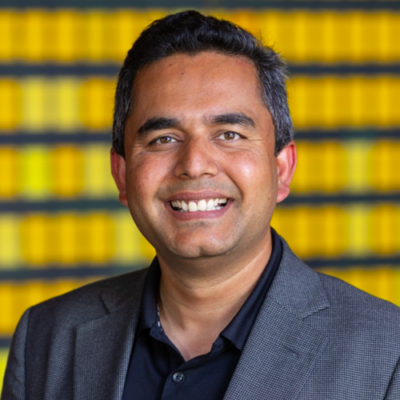
Dr. Akshay Singh is Corporate Vice President of Advanced Packaging Technology Development at Micron Technology. He leads a global team that is responsible for delivering advanced memory packaging solutions for HBM, high performance compute and AI/ML applications. Dr. Singh joined Micron in 2006 as an interposer materials engineer and since then has held number of positions of increasing responsibility in packaging design, integration and technology development. Prior to joining Micron, Dr. Singh held product development positions at Artificial Muscle, Inc. and USDA. Dr. Singh has authored several keynote publications and patents and has served as an invited panel speaker at several conferences. Dr. Singh holds master’s and doctorate degrees in mechanical engineering from Louisiana State University, bachelor’s degree in mechanical engineering from Maharaja Sayajirao University and is a graduate of the Stanford Graduate School of Business Executive Program. Education: Stanford Graduate School of Business Executive Program, Stanford University; PhD and MS, Mechanical Engineering, Louisiana State University; BE, Mechanical Engineering, Maharaja Sayajirao University.

Michael Stewart
Biography
Michael is a Managing Partner at M12 – Microsoft’s Venture Fund, where he leads thesis areas in Generative AI, Gaming, and Systems. His interests include infrastructure and applications for efficient AI scaling and production, interactive and intelligent video gaming experiences, and energy, semiconductor, and photonics technology for future hyperscale compute systems. He has led 20 investments for M12 and serves on the boards of portfolio companies such as d-Matrix, InWorld, PsiQuantum, Armada, Volley, Fastino, Arcee, Syntiant, Lace Lithography, Cloudforce, and nEYE Systems. Michael began his investing career at Applied Ventures, where his investment areas included AI/ML hardware and software, silicon photonics, high precision robotics, and printed electronics. He led investments in twelve AV portfolio companies, including M12 portfolio company Syntiant, and exits include Persimmon Robotics (sold to Sumitomo), Digital Specialty Chemicals (sold to Entegris), Inpria (sold to JSR), and Rockley Photonics (NYSE:RKLY). Prior to joining Applied Ventures, Michael spent 15 years in advanced technology development in the semiconductor industry at Applied Materials and Intel Research, after postdoctoral work in a DARPA program for post-CMOS devices. Michael was co-founder of consumer electronics focused startup JUSE, and inventor of the low-cost CRAFT Cell for silicon photovoltaics. He holds a Ph.D. in Chemistry from Purdue University and an MBA from the Haas School of Business and is an inventor and author of more than 40 patents and 30 peer reviewed publications from his research and technical career (h-index: 31).
Lucas Tsai
Biography
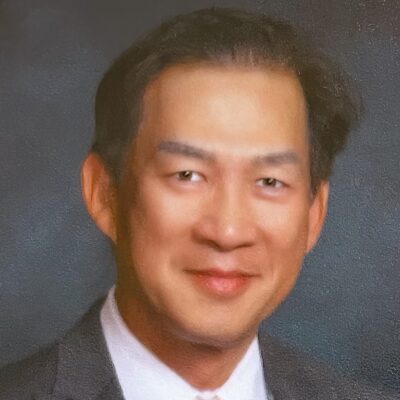
Ph.D. in Electrical Engineering, followed by a rich, all-around career in semiconductor spanning from Process R&D, Circuit Design, Marketing and Sales in a major ASIC house and top foundry. He is particularly specialized in bridging foundry and OEM because of his background in dealing with OEM business in ASIC, and his account management experience in the world #1 foundry.
In his tenure as Marketing Manager with LSI, he was instrumental in bridging LSI and foundry by developing a 0.11um ASIC platform, which later became one of the most successful ASIC technologies in LSI history. While he is with TSMC, he successfully developed SUN Microsystem’s UltraSPARC CPU business in a foundry environment, from 40nm to 7nm. He also developed another multi-billion-dollar business with a consumer OEM company by converting the business from a competitor’s ASIC model to TSMC’s foundry model, and in the meanwhile, enabled foundry business model to meet OEM’s stringent supply chain requirements. Recently he duplicated his success with another major cloud service provider and developed this business into the billion dollar club as well. He is currently responsible for all sales funnels, including emerging fabless and system accounts, and also market development, in North America region. He is also responsible for the revived corporate venture in the NA region.
Lucas was granted more than 20 US patents, and has published more than 40 papers in technical journals and conferences.

Raja Swaminathan
Biography
Dr. Raja Swaminathan is the Corporate Vice President of Heterogeneous Integration Technologies at AMD, spearheading the development of AMD’s advanced packaging and heterogeneous integration roadmap. He also leads the Optics technology development at AMD, driving innovation in high-speed optical interconnects and photonics integration. With a distinguished career spanning roles at Intel, Apple, and now AMD, Dr. Swaminathan’s expertise in design-technology co-optimization and dedication to optimizing power, performance, area, and cost (PPAC) have led to significant technological advancements such as EMIB, Apple’s Mx packages, 3D V-Cache, and 3.5D architectures for AI accelerators. Dr. Swaminathan holds a PhD from Carnegie Mellon University and an undergraduate degree from IIT Madras. With over 100 patents and more than 40 published papers to his name, he was recently recognized as an IEEE Fellow and serves as a technical advisor to multiple startups. His unwavering commitment to heterogeneous integration continues to drive the boundaries of silicon technology. He also shares his insights on life and leadership, drawing lessons from the semiconductor industry, on his LinkedIn profile.
Kevin Chen
Biography
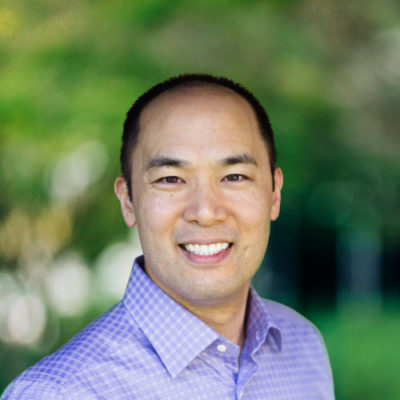
Kevin joined Lam Capital mid-2020 bringing over 15 years of entrepreneurial and operating experience in materials-centric deep- and bio-tech companies. Most recently, Kevin was CEO of Crop Enhancement, an agriculture technology company commercializing novel products that replace synthetic pesticides, leading it from Seed through Series B. Prior to that, Kevin held senior roles at Hanergy (EVP of Silicon Valley Product Development Group) and Applied Materials (CMO of Energy and Environmental Solutions and GM of Energy Storage Solutions). Prior to Applied, Kevin led business development and product management efforts at NanoGram (acquired), AMD/Spansion, and Lumentum. Kevin’s passion for entrepreneurship was ignited early in his career when he co-founded Cumulus Photonics to commercialize innovative optical networking equipment. Kevin earned PhD and SM degrees in Materials Science & Engineering from MIT, a BS in Engineering Science from Penn State University, and is a Kauffman Fellows Finalist. He is a director of Crop Enhancement and mentor with the MIT VMS.

Yvonne Lutsch
Biography
Yvonne joined Lam Capital in October 2024 as Investment Director, bringing over 7 years of venture capital experience from Bosch Ventures, where she led investments in deep tech fields like AI, quantum computing, semiconductors, sensors, and industrial technology. She also has 13+ years of operational experience at Bosch, having served in leadership roles across technology scouting, business development, engineering, and electronics in both mobility as well as consumer electronics . Yvonne holds a PhD in Applied Physics from University of Tuebingen and a Diploma in Experimental Physics from University of Siegen, both Germany.
Chee Ping Lee
Biography
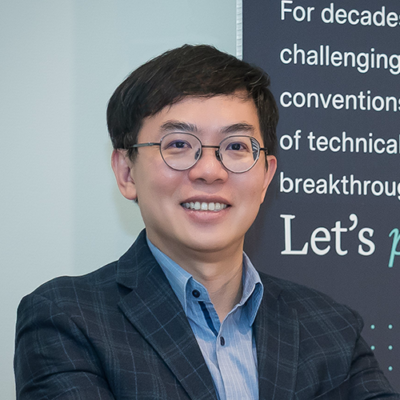
Chee Ping Lee is a Managing Director for Strategic Marketing at Lam Research, with over 22 years of experience in the semiconductor industry. His expertise spans advanced packaging and heterogeneous integration, where he leads strategic and technical marketing for Lam’s wafer- and panel-level equipment solutions. He plays a key role in mapping industry roadmap, understanding technology direction to shape Lam solutions and fostering collaboration across the semiconductor ecosystem. A recognized industry voice, Chee Ping frequently shares insights at leading advanced semiconductor packaging conferences.
Chee Ping received his M.Sc in Financial Engineering and B.Eng in Chemical Engineering from National University of Singapore.
2026 Finalists
Ten breakthrough startups have been selected from around the world to compete live for a $250,000 investment, mentorship, and strategic partnerships. Each is pushing the frontier of AI-enabled semiconductor and advanced manufacturing technology.

Amazing Cool
Amazing Cool Technology specializes in the mass production of Graphene-Metal hybrids designed to enhance the conductivity and reliability of alloys. By significantly improving energy efficiency, the company aims to create a positive “green cycle” for the global environment.

Quick Tsai
With 25 years in semiconductors, Quick Tsai pioneered pressure oven degassing at UTAC and managed OSAT operations at MediaTek. At WHALECHIP, by spearheading the first mass production of ASIC-on-DRAM Wafer-on-Wafer (WoW) technology with TSMC. He now serves as Executive Director of Amazing Cool Technology, leveraging his physics and engineering expertise to innovate advanced semiconductor materials.

Flexify
Flexify.AI is the AI coworker platform for manufacturing operations. Five autonomous agents — Parts 360, MatchMaster, SourceSmart, Scenario, and TariffPro — monitor your product portfolio, find qualified alternates using Physical AI, and ensure trade compliance, turning 8-hour engineering reviews into 8-minute resolutions. They share memory, escalate to each other, and work while you sleep. Live with 2 paid semiconductor WFE OEMs. Snowflake Top 10 Startup finalist. Flexify.AI is part of UC Berkeley SkyDeck Batch 20 (top 3%).
Siva Devarakonda
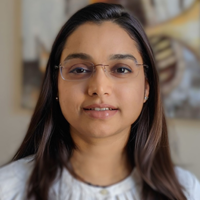
Sivanvitha (Siva) Devarakonda is the Founder & CEO of Flexify.AI, the AI coworker platform for manufacturing operations. Before founding Flexify.AI, Siva was Director of AI/ML at Lam Research, where she drove transformative supply chain, data, and MLOps platform initiatives across multiple BUs. A NeurIPS 2025 author and inventor on five granted patents, she has spent 15+ years deploying production AI across semiconductor fabs, industrial IoT, and safety-critical aerospace. Prior roles include VP Data Science at Noodle.AI (Gartner Cool Vendor, Forbes AI Top 50), GE Digital, and Pratt & Whitney, where she built real-time engine health monitoring for the F-35 and A320neo fleets.

Fringe Metrology
As chips move to 3D stacking, tiny alignment errors, surface defects, and warpage compounds—driving yield loss and limiting scalability. Fringe Metrology is building a breakthrough inspection layer powered by a novel structured light architecture to solve this bottleneck. Delivering orders-of-magnitude improvements in resolution, noise resistance, and dynamic range, our technology enables simultaneous die warpage measurement and macro defect detection—unlocking the high-volume yields needed for the next generation of advanced packaging.
Joel Berkson
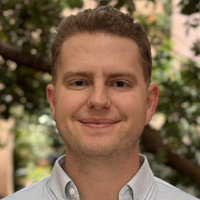
Dr. Joel Berkson is the CEO and founder of Fringe Metrology, developing next generation inspection systems. He earned his Ph.D. from the University of Arizona’s Wyant College of Optical Sciences, where his innovative work in scalable telescope systems and metrology earned him Tech Launch Arizona’s Student Innovator of the Year award in 2022. Since then, his full efforts are toward commercializing Fringe Metrology’s novel metrology techniques for semiconductor inspection.

Lightfinder
Lightfinder develops chip-scale spectrometers and imaging systems that deliver lab-grade optical sensing in a miniaturized, scalable form. Built on silicon photonics and paired with intelligent software, the platform enables real-time, in-situ analysis in places legacy instruments can’t reach—from inside semiconductor process tools to the factory floor—powering critical decisions in advanced manufacturing, telecommunications, and beyond.
Diana Mojahed
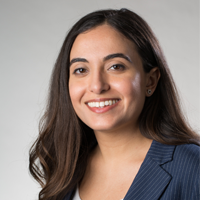
Diana Mojahed is the founder and CEO of Lightfinder, an MIT spinout pioneering integrated photonics to deliver compact, high-performance spectroscopy and imaging across industries. Mojahed earned her Ph.D. in biomedical engineering from Columbia University and completed postdoctoral training in MIT’s Department of Materials Science & Engineering, where she was named a Kavanaugh Fellow and won the Audience Choice Award at the MIT $100K Entrepreneurship Competition. She is a 2025 Activate Fellow and an ambassador for Optica, the scientific society for photonics.

Meukron
Meukron Technologies is a deep-tech startup pioneering a sustainable, HF-free (Hydrofluoric Acid-free) manufacturing ecosystem for high-precision glass micro-engineering. We specialize in the fabrication of complex features on glass core substrates for microfluidic platforms and through glass vias (TGVs), addressing the critical shortcomings of existing technologies for glass microfabrication.
Neeraj Bagi

Neeraj Bagi is the founder and CEO of Meukron Technologies, a deep-tech startup pioneering an advanced glass micro-structuring platform for semiconductor packaging and microfluidics. With a background spanning precision micro-engineering, embedded systems, and process engineering — including roles at GE Healthcare and Unilever — he has led Meukron from concept to patented, commercially deployed technology. Neeraj brings a rare combination of industrial R&D experience and deep-tech entrepreneurship to one of advanced manufacturing’s most critical material challenges.

New Silicon Corporation (NSC)
NSC is a fab-less chip company with a revolutionary monolithic, self-aligned process for integrating GaN devices into commercial silicon chips. The technology is the spin-out of a 12 year, $100M collaboration between Singapore and MIT. NSC is developing Lightwire, LED interconnects built entirely within silicon interposers chips at 500 links/mm, operating at Gbps-class data rates with < 0.5 pJ/bit power consumption and BER < 10-15.
Andrew Kim
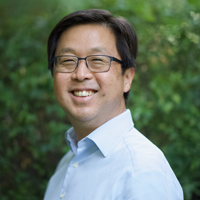
Dr. Andrew Kim is CEO of NSC. Prior to that, he was Co-Founder and COO of Glint Lighting, leading it to a successful exit to Luminii and held leadership positions in R&D and Operations during an impactful 16 year career at Lumileds. Dr. Kim holds S.B. and Ph.D. degrees from MIT.

SemiAI
SemiAI builds fab-native AI software that helps semiconductor manufacturers predict yield issues, accelerate root-cause analysis, and optimize process decisions. Its SMILE platform combines multimodal inference, predictive intelligence, and a Virtual Fab digital twin to reduce rework, shorten engineering cycles, and improve yield at advanced nodes.
Taekwon Jee
Taekwon Jee is the CEO & Founder of SemiAI, where he is building AI software for semiconductor manufacturing. He holds a Ph.D. in Mechanical Engineering from UC Berkeley and brings 15+ years of semiconductor experience across SK hynix, ASML, Samsung, and Lam Research, with deep expertise in yield improvement and process control.
TDS Innovation
TDS Innovation advances 2D semiconductor technology for next-generation AI chips. Using its proprietary Crystal Layer Deposition (CLD) process, the company enables highly crystalline thin films without substrate limitations while building integrated capabilities across both materials and equipment.
Kibum Kang
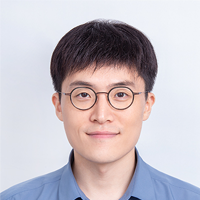
Kibum Kang, CEO of TDS Innovation and a professor at KAIST, is a leading researcher in 2D semiconductor technology for next-generation logic and AI chips. He is working to accelerate the commercialization of highly crystalline 2D semiconductor thin films through TDS Innovation’s proprietary Crystal Layer Deposition.

Trener Robotics
Trener trains AI skills for robots, delivered with integrated tooling for deployment, training, and system integration.. These robot skill models are fully deployed at the edge, and give robots unprecedented inference and intelligence capabilities to perform industrial tasks with machine-like precision and human-level problem-solving.
Asad Tirmizi
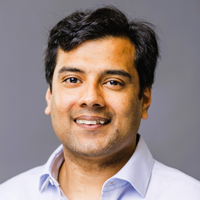
Asad Tirmizi is the founder and CEO of Trener. The company creates Physical AI skills for robots. Before founding the company, he was a Research Scientist at ByteDance Inc., and Vicarious Inc. (acquired by Google). He has an award-winning Ph.D. in Robot Learning. His subsequent research in robotics led to his selection by the EU as one of 15 Next Generation Innovators. He lives in the Bay Area, California, with his wife and son.

Vertical Compute
Vertical Compute is a semiconductor startup dedicated to resolving the AI memory bottleneck through its groundbreaking Vertically Integrated Memory (VIM) technology. By integrating high-density, vertical magnetic domain memory directly onto logic chips in the CMOS back-end-of-line (BEOL), the company reduces critical datapaths from centimeters to nanometers. Delivered as a 3D chiplet, this disruptive architecture minimizes latency and energy consumption while enhancing performance and cost-effectiveness for the global AI industry.
Sylvain Dubois

Sylvain Dubois, a business executive with 25 years of experience in the compute and memory fields, has extensive knowledge of the deep tech ecosystem and a strong understanding of the memory bottleneck problem, which he explored during his time at Google.
Before founding Vertical Compute, Sylvain Dubois held the position of Advanced Technology Sourcing & Partnerships for the Google Cloud Infrastructure group in Sunnyvale, CA, focusing on AI hardware acceleration, novel memory, and chiplet integration.
Prior to his role at Google, he served as Vice-President of Business at Crossbar, a California-based deep tech startup specializing in novel memory development, where he played a key strategic role in fundraising and business development.
Poster Session
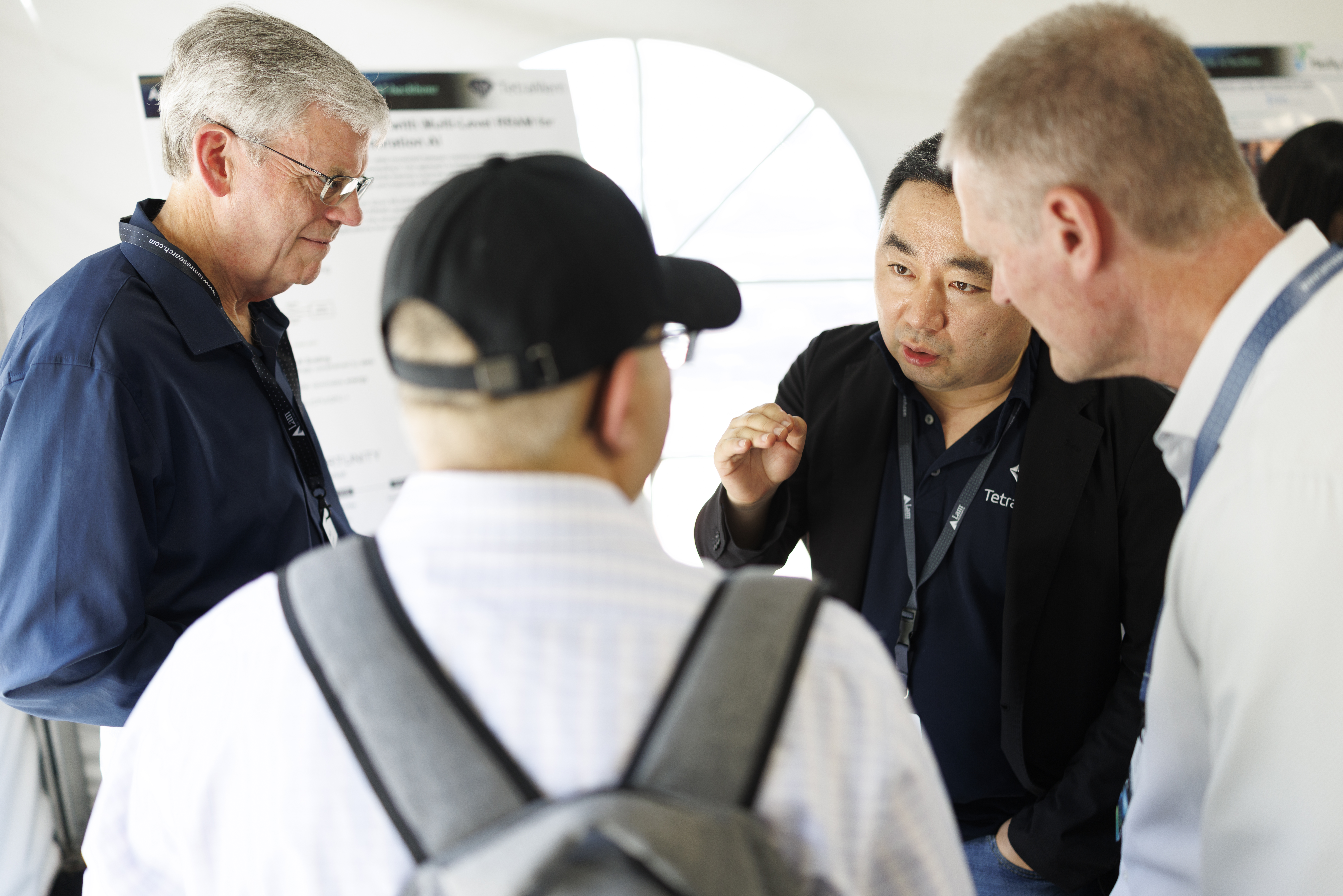
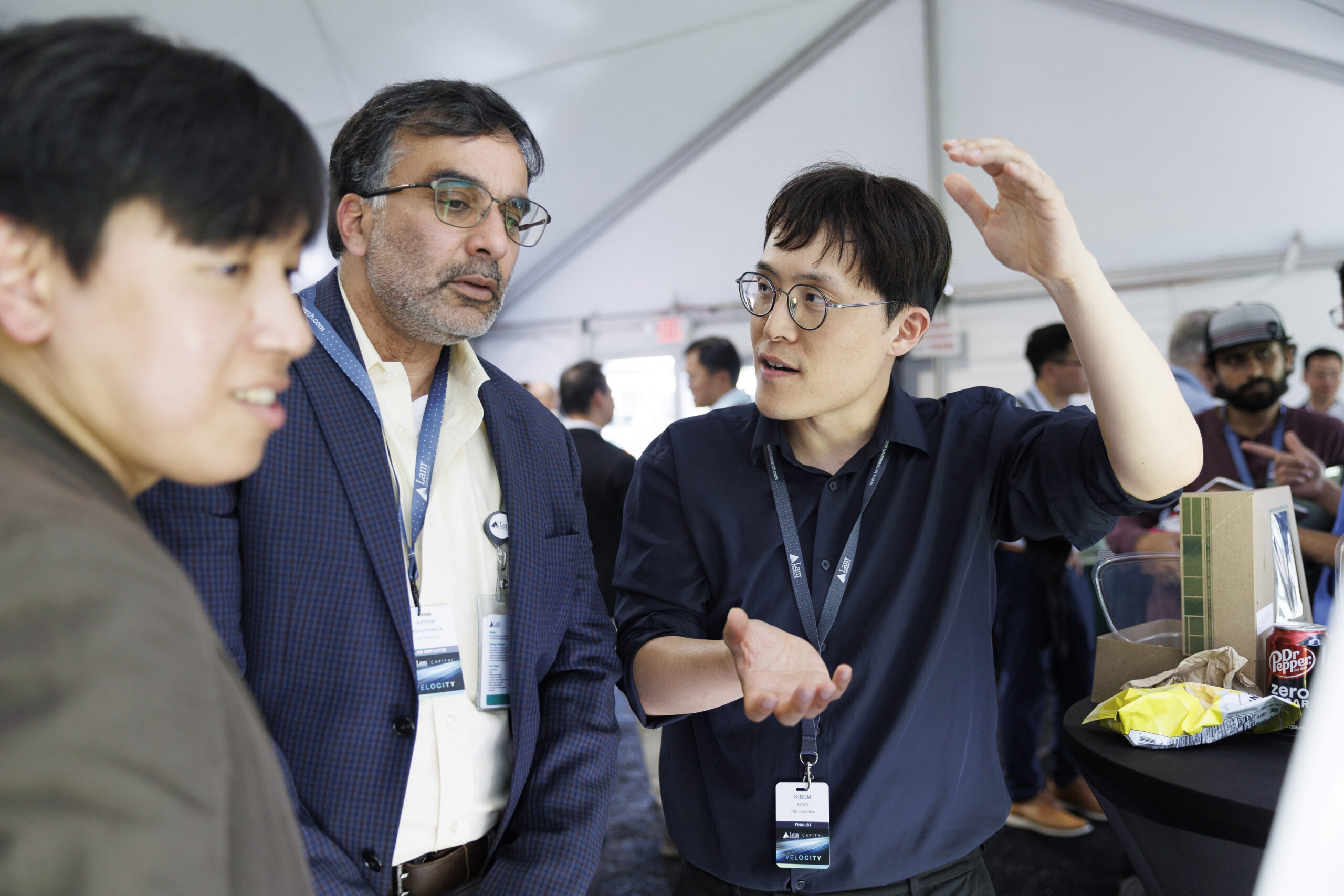
The poster session showcases startups from Lam Capital’s portfolio, providing an interactive setting for deeper technical and business discussions during the lunch networking period.

2Pi
2Pi pioneers cutting-edge metasurface flat optics technology. The company addresses the rapidly-growing demands for advanced optical solutions across imaging, sensing, communication, computing, etc. Leveraging wafer-scale semiconductor manufacturing and strategic partnerships with top industry leaders, 2Pi delivers high-performance, cost-effective, and scalable meta+optics products.
Tian Gu
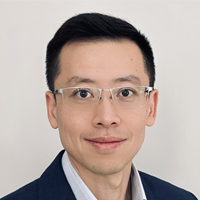
Dr. Tian Gu is Co-founder and CEO of 2Pi, an MIT spinout developing next-generation metasurface flat optics technology.
His background spans nano-/micro-optics, integrated photonics, and photonic materials. He leads the company’s efforts to bring high-performance meta-optics from breakthrough innovations to real-world deployment through end-to-end product development, scalable semiconductor manufacturing, and strategic industry partnerships.

Avicena
Avicena is a Sunnyvale, California–based startup pioneering microLED optical interconnects for data centers. Its LightBundle™ technology platform enables the most reliable and power-efficient optical interconnects for AI scale‑up and scale‑in architectures, overcoming the reach, power, reliability and scalability limits of traditional copper and laser‑based interconnects.
Marco Chisari

Marco Chisari is Chief Executive Officer of Avicena, bringing more than 25 years of leadership across semiconductors, foundries, and investment banking, including senior roles at Samsung and GlobalFoundries.

Corvic
Corvic AI is the Intelligence Composition Platform — a logic layer between enterprise data infrastructure and AI models that enables teams to build and deploy intelligent data applications without custom pipelines, brittle integrations, or constant rebuilds. Powered by three proprietary technologies (CAPA™, MoS™, and ECoAA™), Corvic ingests multimodal, multi-structured data natively and produces fully explainable, zero-hallucination AI outputs with complete auditability. Backed by Lam Capital, Bosch Ventures, and M Ventures, Corvic is trusted by pioneers in pharma, manufacturing, and enterprise software — delivering 99.9% retrieval precision and 20× faster time-to-value versus custom pipeline approaches.
Gurbinder Gill
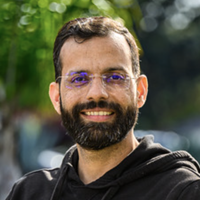
Dr. Gurbinder Gill is Co-Founder and Chief Product Officer of Corvic AI, bringing a PhD in Computer Science from UT Austin and deep expertise in distributed computing, graph analytics, and parallel machine learning systems. Before Corvic, he served as Head of Product and founding engineer at Katana Graph, and previously worked on data analytics infrastructure at Microsoft and Meta. His research background — with over 850 scholarly citations — directly underpins Corvic’s proprietary MoS™ and ECoAA™ architectures.

Crystal Sonic Inc.
Crystal Sonic Inc. develops in advanced manufacturing for next generation semiconductors. The company’s patented Sonic Lift-off technology reduces waste and lowers cost for semiconductor manufacturers by harnessing the power of sound. By incorporating Sonic Lift-off technology, chip makers can improve manufacturing sustainability and accelerate the emergence of advanced chips essential for electrification, communications, and sensing applications of tomorrow.
Arno Merkle

Arno Merkle, Co-founder and CEO of Crystal Sonic is an accomplished leader in the capital equipment and deep tech industries. With a robust background in leading product teams and driving business development at renowned companies including Carl Zeiss, Tescan, Xradia, and XRE, Arno has been instrumental in shaping the landscape of advanced electron- and X-ray microscopy systems across various sectors. His strategic contributions led to successful exits at startups Xradia and XRE in 2013 and 2018, respectively.
Arno holds a Ph.D. in Materials Science and Engineering from Northwestern University (2007) and currently resides in Phoenix, Arizona.

eBots Inc.
eBots delivers robotic AI solutions that automate manufacturing processes traditionally considered un-automatable. The company serves electronics, medical, and EV-related industries with its proprietary dual‑arm assembly systems and Denali 3D vision technology, enabling micron-level precision manufacturing and assembly solutions.
Zheng Xu
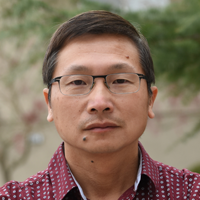
Zheng Xu is the founder and CEO of eBots with a proven track record as a serial entrepreneur, most notably leading Silveo, Inc. until its acquisition by SolarCity/Tesla for $350M. He is a recognized leader in the semiconductor industry, having served as a Corporate VP and GM at Applied Materials. Dr. Xu holds a Ph.D. in Materials Science and EE and is an inventor with 110 U.S. patents.

Geminus.ai
Geminus.ai believes that predictive intelligence should inform and optimize every decision. The company unleashes the power of predictive intelligence by intersecting AI and physics with multi-fidelity modeling. Their novel, first-principles AI translates the constraints of the physical world inside resilient digital models. The company’s platform requires only sparse data to quickly analyze the behavior of complex industrial systems, and can precisely predict the impact of decisions that drive businesses forward.
Greg Fallon

Greg is passionate about solving the world’s most complex problems, faster. A lifelong nerd and seasoned executive, Greg has led some of the most innovative product initiatives in the industrial software world over the last 25+ years. He spearheaded the first commercial generative design tools using AI at Autodesk and created the most successful industrial analytics software tools at Fluent (later Ansys).

Multibeam
Multibeam has re-innovated e-beam lithography to enable cost-effective production of leading-edge semiconductors for advanced packaging, photonics, rapid prototyping, and other special applications.
It is the industry’s only maskless multi-column e-beam platform that offers full-wafer direct write patterning capabilities with fine resolution in a modular architecture that is optimized for scale. The fully automated system features multiple miniaturized e-beam delivery columns and advanced algorithms that enable precision patterning with fab-level productivity.
Innovated by patterning and wafer fab equipment experts, Multibeam systems empower IC leaders to make patterns that are impossible, difficult, or too expensive for mask-based solutions, with breakthrough time-to-market advantages.
Ted Prescop

As Vice President of Technology at Multibeam, Ted Prescop leads the technology and application development of Multibeam’s proprietary MEBL systems. He has experience in semiconductor chip design, process development, and metrology at fabless foundries, KLA-Tencor and Veeco. Mr. Prescop holds B.S. and M.S. degrees in Engineering Physics and Mechanical Engineering, respectively, from UC Berkeley.

OpenLight
OpenLight Photonics is pioneering silicon photonics with the world’s first open PDK, enabling heterogeneous integration of III-V devices, including lasers, optical amplifiers, high-speed electro-absorption modulators (EAMs), and high-efficiency photodetectors. Available through Tower Semiconductor’s PH18DA process, the platform combines these active components with a comprehensive library of silicon and silicon nitride photonic building blocks, including waveguides, edge and grating couplers, and more complex structures such as filters, switches, and splitters—enabling customers to design a wide range of photonic ASICs (PASICs). OpenLight offers a library of reference designs for standardized datacom applications, significantly shortening time-to-market by providing verified designs. In addition, OpenLight provides design, layout, test and fabrication services for custom circuits and components leveraging its experience and partner ecosystem to help transform bare dies into finished products.
Steven Alleston
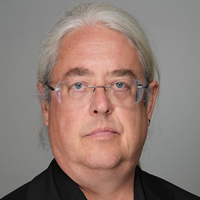
Steven Alleston is an almost 30 year veteran of the photonics industry, holding a variety of engineering, product management and strategy positions with companies such as Marconi, Ericsson and Juniper Networks (now HPE). He is currently Senior Director of Business Development for OpenLight and holds a PhD from the University of Essex in the UK.
Os Corporation
By leveraging multi-channel heat source RTP and integrated thermal/plasma chamber technologies, Os Corporation targets a step-change improvement in atomic layer etching process rates.
Eunggoo Lee
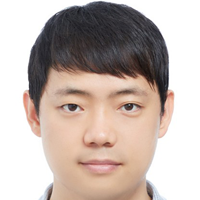
Eunggoo Lee is the CEO of Os Corporation, which develops ALD, ALE, CVD equipment for semiconductors.
Eunggoo started his career as a process engineer, developing OLED manufacturing equipment. His expertise include process development, concept design, process testing, and manufacturing performance evaluation.
Eunggoo holds a Ph.D. in Materials Science and Engineering from Korea University.
TetraMem
TetraMem is a Silicon Valley–based semiconductor company developing analog in-memory computing solutions using multi-level RRAM technology to address the energy and data movement challenges of AI. By integrating memory and compute, TetraMem enables high-performance, energy-efficient AI processing for edge and future data center applications. The company works closely with leading foundries and partners, including Lam Research, to bring its technology from research to commercial silicon at 22nm and beyond.
Glenn Ge
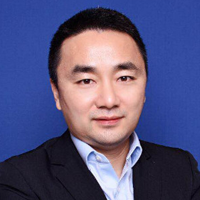
Dr. Glenn Ge is the Co-founder and CEO of TetraMem, leading the development of analog in-memory computing based on multi-level RRAM for next-generation AI systems. He brings over 22 years of industry experience with deep expertise in device, circuit, and system co-design. Dr. Ge is also a prolific inventor with approximately 1,000 patents and publications in advanced memory and computing technologies.
Participating Companies
Our event convened over 300 distinguished industry leaders in semiconductor and AI, prominent deeptech VC/CVC investors, as well as senior technologists and executives from Lam Research. Together, we are creating a platform where cutting-edge startups can build meaningful relationships with potential investors, customers, and strategic partners.